Streetwear isn’t just a look. It’s a language, a political statement, and for so many of us in the diaspora, it’s a way to be seen. From Lagos to Paris, African streetwear is shifting the narrative not just of fashion, but of identity, pride, and power. Brands like Daily Paper, Off-White, and WafflesnCream aren’t simply creating clothes. They’re building legacies, reimagining culture, and telling stories that were too often erased or overlooked.

African Streetwear:A movement, not a moment
Let’s be real streetwear has always been rooted in resistance. From New York hip-hop scenes to London’s gritty corners, it emerged as a rebellion against traditional fashion norms. But when you bring African identity into it, the movement becomes even more layered. It’s about reclaiming space, repping heritage, and remixing style codes.
Brands like Daily Paper are the blueprint. Founded by three friends of Somali, Moroccan, and Ghanaian descent in Amsterdam, the label fuses heritage with hype. You’ll see prints inspired by African tribes blended with sharp tailoring and bold colorways that speak directly to the diaspora. It’s more than fashion; it’s cultural preservation with a twist of street.

Then there’s Off-White, the late Virgil Abloh’s baby. As a Ghanaian-American creative director, Virgil didn’t just enter high fashion—he redefined it. He blurred the lines between luxury and street, and made it clear that Black creatives aren’t just muses, we’re architects. Off-White wasn’t overtly African in aesthetic, but it was deeply rooted in African diasporic identity: futuristic, boundary-pushing, unapologetically bold.

From Lagos Streets to Global Runways
African cities like Lagos, Accra, and Nairobi are becoming fashion capitals in their own right. The streetwear scenes there are electric not just following trends, but creating them.
Take WafflesnCream, Nigeria’s first skate brand. It’s raw, unfiltered, and proudly Nigerian. Their designs are laced with cultural references, subverting colonial histories and giving voice to youth culture. It’s not about fitting into Western fashion. It’s about flipping it.
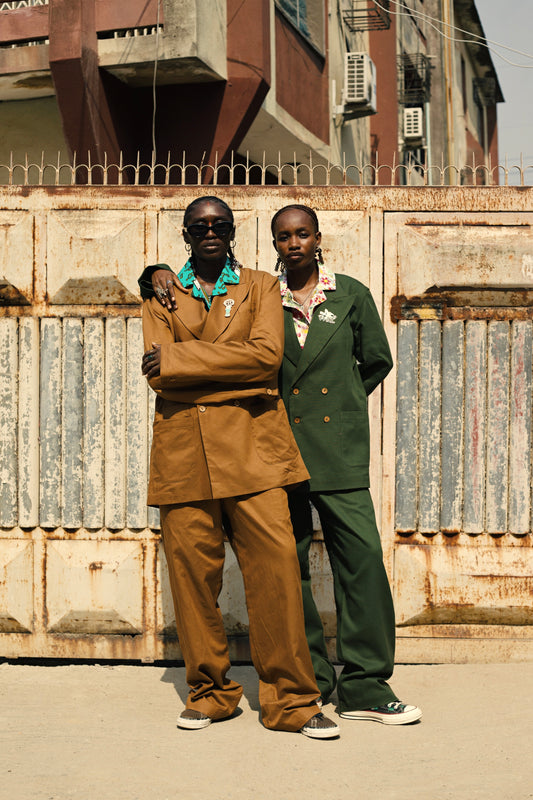
And we can’t forget about IAMISIGO, Post Imperial, or Mxlhst. These aren’t just fashion brands. They’re platforms that challenge what it means to be African in a globalized world. They blend craftsmanship with cool, street attitude with ancestral pride. It’s this energy that is redefining what fashion looks like in 2025.


London Meets Lagos: A Diasporic Dialogue
Being a Black woman growing up across France, Cameroon, Switzerland, and the UK, my style has always been a remix of everywhere I’ve been. London, with its grime, Afro-Caribbean culture, and underground fashion scene, taught me the art of self-expression. But Lagos gave me soul. It reminded me that our stories are rich, our prints are powerful, and our swagger is unmatched.
The fusion of European tailoring and African vibrancy is something I carry with me daily. I can pair a wax print top with vintage denim and sneakers, and that’s a full look because it speaks to my whole journey. It’s fashion that honors the past but looks fly in the now.
Streetwear as Protest & Power
Streetwear is inherently political. In Africa, where post-colonial identities are constantly being negotiated, what you wear becomes a form of resistance. It’s saying: “I see myself. I own my narrative.”
Whether it’s a tee that says “Afrika Is The Future” or a bomber jacket embroidered with ancestral symbols, African streetwear is speaking truth. It’s a rebellion against whitewashed fashion runways. It’s about visibility in spaces that weren’t built for us.
And the beauty? It’s not waiting for permission.

Why It Matters: More Than Aesthetic
When African streetwear brands take center stage, they’re not just disrupting style they’re reclaiming economics, creativity, and legacy. It’s about ownership. It’s about putting money back into African hands, spotlighting local artisans, and shifting the power dynamics in fashion.
Supporting brands like Daily Paper, Mowalola, or Rich Mnisi is a choice. It’s choosing authenticity over fast fashion, choosing legacy over logos.


The Future Is African (and Dressed in Streetwear)
We’re in a new era where African streetwear is the pulse. From Lagos to Paris, from Soweto to Shoreditch, our style is setting the tone. We’re not borrowing culture we’re living it, evolving it, and exporting it on our own terms.This isn’t just about clothes. It’s about identity. It’s about rewriting the fashion rulebook and making room for stories that deserve to be told.
So when I get dressed, I’m not just thinking about the fit. I’m thinking about legacy, resistance, and joy. Because in this fabric, this color, this print I see me.And that’s what streetwear is really about: being seen, being heard, and owning every inch of it.
see you next week guys!!!
© 2025 Culture-Anthology. All Rights Reserved.


 culture-anthology
Leave a reply to jswag Cancel reply