On cultural cycles, absurdism, and why nothing feels “right” anymore
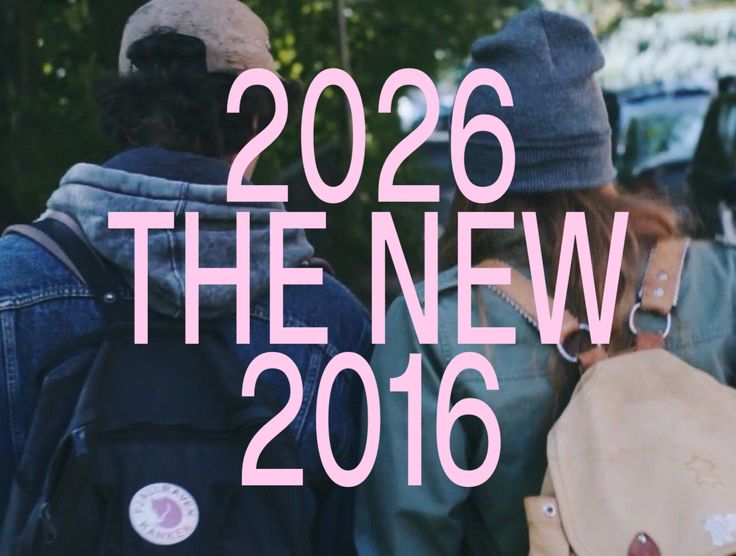
This post started as a conversation with my friend Alex — shoutout to him — one of those late, slightly unhinged cultural debriefs where you’re not trying to sound smart, you’re just trying to make sense of why everything feels… off. We weren’t talking about trends in the shallow way. We were talking about cycles. About exhaustion. About how culture keeps moving faster, louder, more absurd — and yet somehow feels stuck.
At one point, he said something that hasn’t left me since: “we’re finding meaning in ourselves while admitting the collective is lost.”
And that sentence kind of cracked everything open for me.Because if you look closely, that’s exactly what’s happening right now — not just in music, but across aesthetics, language, internet behavior, nostalgia, even how we remember the recent past. We’re not in a moment of belief. We’re not even fully in rebellion. We’re in something messier: a late-stage coping phase.
Culture doesn’t move forward — it spirals
One thing we forget when we talk about “where culture is going” is that culture doesn’t move in straight lines. It moves in emotional cycles. These cycles aren’t about sound or fashion first — they’re about belief.
Very broadly, culture tends to move like this: belief, excess, cracks, collapse, absurdism, burnout, reconstruction… and then, eventually, belief again.
When people broadly trust institutions and the future feels legible, culture is confident. When belief turns into spectacle, you get glamor and excess. Then the cracks show. Then something breaks economically, politically, socially. And when belief collapses, culture doesn’t immediately become serious. It becomes ironic. Loud. Random. Absurd. Sound familiar?
Dada ( dadaism) already warned us
After World War I, Europe was spiritually and morally shattered. The belief in progress, rationality, and language itself collapsed. The response wasn’t beauty or hope — it was Dada.
Dada said:
- meaning is fake
- language is broken
- seriousness is complicit
- nonsense is more honest than sense
So culture responded with:
- randomness
- babbling
- collage
- provocation
- “the pointless is the point”
If you’ve ever read Art in Theory 1900–2000, you know this wasn’t just aesthetic rebellion — it was psychological survival. When nothing makes sense, refusing sense becomes the most honest response.Now fast-forward to 2021–2026. Tell me that’s not exactly where we are.
2016 was the last “legible” year
I genuinely believe 2016 was the last moment where people really tried to cope together. The cracks were already there, but reality still felt shared. Culture still felt playable.
Then came 2017–2021 ,the emo phase we all went through as a society. Political chaos, pandemic grief, existential dread. Everyone processing everything, all the time. Now we’re here: hyper-processing, hyper-referencing, hyper-nostalgic — and somehow missing what’s actually changing underneath us.
Culture is moving incredibly fast, but paradoxically, we’re not keeping anything in mind. Important evolutions slip past because we’re overwhelmed by noise. Rae becoming friends with Charli XCX — the face of mainstream absurdism — isn’t just pop trivia. It’s a signal. Absurdism isn’t underground anymore. It’s glossy. Bankable. Normal.
Why music feels like it’s eating itself
This is especially obvious in music right now.Think about how many artists are remastering, sampling, or lightly reworking old songs — especially in R&B and rap. These aren’t radical reinterpretations. They often sound almost identical to the original. The culture isn’t saying, “let’s move forward.” It’s saying, “please, let’s not forget.”
Sampling has always been cultural memory. In Black music especially, it’s lineage. But right now, sampling feels less like dialogue and more like preservation. Like we’re afraid the original meaning might disappear if we don’t keep replaying it.
Nothing proves this more than the endless search for the “next Frank Ocean.”
Frank Ocean didn’t arrive by accident
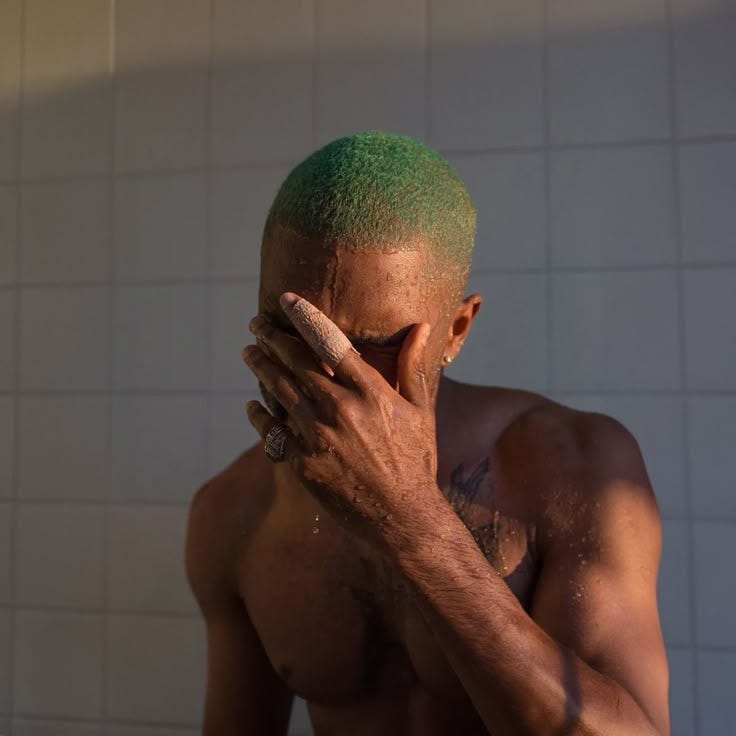
Frank Ocean copies took years to come through — and there’s a reason for that. Frank emerged during a cracks era, not full collapse. His work sat in uncertainty without mocking it. He cared openly. He took time. He disappeared. He fought Def Jam. He refused the content machine.
You can’t mass-produce that emotional posture.
And now, in late absurdism, trying to replicate Frank’s sound without his conditions feels hollow. The industry wants the intimacy without the patience. The vulnerability without the risk. That’s why so much music feels technically good but emotionally weightless.
Absurdism at full volume
From 2023 to now, absurdism has hit maximum saturation:
- irony stacked on irony
- hyper-self-awareness
- aesthetics without memory
- nostalgia so intense it starts to feel embarrassing
People are replaying 2016 because it represents the last time culture felt readable. But many of the people mimicking that era were children when it happened. That creates cosplay instead of expression.Historically, this always happens right before a shift.
Absurdism only works while escalation still gives relief. Right now, it doesn’t. Louder doesn’t feel better. Chaos doesn’t distract anymore. The joke isn’t funny — it’s tiring.
That’s burnout.
What comes next isn’t exciting — yet
What doesn’t come next:
- immediate optimism
- a new genre saving everything
- a clean, named movement
What comes next is reconstruction.
Reconstruction is quieter. More serious. Less performative. It’s not about fixing the world — it’s about building meaning anyway, without guarantees. Effort without applause. Care without pretending it redeems everything.This phase lasts years. And in the beginning, it feels empty. Confusing. Like nothing is “working.”
That’s where we are now.
The posture before the sound
In transition phases, genres don’t break through first — postures do.
The posture forming right now looks like:
- accepting collective meaninglessness
- while practicing individual meaning anyway
- seriousness without self-importance
- effort without promises
That’s why early Kanye is still such a perfect reference — not sonically, but emotionally. He admitted uncertainty. He cared openly. He worked hard without pretending it would save him. He made people want to try simply by trying himself.
That emotional honesty resolves the tension we’re sitting in.
Staying is the new flex
The next few years won’t reward spectacle. They’ll reward people who stay. People who choose one thing and stick with it. People who build slowly. People who care quietly.Culture isn’t dead. It’s exhausted. And exhaustion isn’t the end — it’s the pause before reconstruction.Finding meaning in yourself while admitting the collective is lost isn’t nihilism. It’s maturity.
And honestly? I don’t think there’s anything more interesting than that conversation right now.
see you next week, guys!
Perrine
© 2026 Culture-Anthology
 culture-anthology
Leave a comment