
Memes aren’t just jokes. They’re stories. They’re history. They’re culture in its rawest, quickest, funniest form. If folktales used to be passed down around the fire, memes are what we pass around in the group chat. They carry codes, lessons, inside jokes that only we fully get. And if we’re being real? Black Twitter and Black TikTok are the griots of this era. The storytellers. The ones shaping the dictionary that everyone else copies months later.
Why memes are folklore

Folklore has always been about survival and connection. It’s the whispered story, the call-and-response chant, the thing that holds a community together when the world refuses to write you into the official narrative. That’s exactly what memes do.
A single screenshot, a reaction gif, a sound on TikTok — they travel, they evolve, they belong to everyone and no one. And when they come from Black Twitter or Black TikTok, they carry extra weight. Because it’s never just a meme — it’s a layered archive of culture, history, and that very specific humor that keeps us alive.
Black Twitter: the newsroom, the comedy club, the kitchen table

Black Twitter is not a side of the internet — it’s the internet. If you’ve been there, you know it’s like a constant live show: breaking news, comedy, deep cultural takes, family drama, and inside jokes all running at the same time.
The “Crying Jordan” face? That was us.
Keke Palmer saying “sorry to this man”? Us.
Every reaction gif that brands now overuse? Us.
Black Twitter runs on remix culture. Someone drops a joke, and the timeline runs with it until it turns into folklore — a shorthand only those who were there can decode. It’s a modern-day ring shout: collective rhythm, collective memory.
Black TikTok: the stage

If Black Twitter is the oral tradition, Black TikTok is the performance. Every trend, every sound, every dance — nine times out of ten, the roots trace back to a Black creator. The problem? Platforms and mainstream media love to erase the source. We saw it with the Renegade dance by Jalaiah Harmon. We see it every time a white influencer gets brand deals for something that started on Black TikTok.
But still, the influence is undeniable. Black TikTok is folklore in motion: a digital call-and-response where one person starts, another adds their own twist, and suddenly the whole internet is moving in rhythm.
Memes as survival + joy
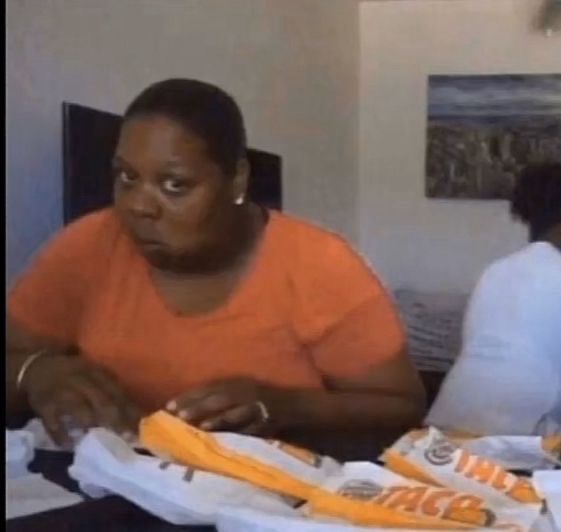
Here’s the part people underestimate: memes are coping mechanisms. For Black people, humor has always been survival. A meme about microaggressions? That’s lived experience turned into a laugh so it doesn’t break us. A viral tweet during protests? That’s both strategy and release.
But memes are also joy. They’re the aunties at the cookout, the cousins roasting each other, the viral dance that makes the whole diaspora move. They’re us documenting our joy in real time. And joy is resistance, too.
The ripple effect

What starts on Black Twitter and Black TikTok never stays there. It jumps to Instagram, then brand accounts, then the mainstream press. By the time corporations are tweeting “it’s giving…” or “we outside,” it’s already old to us. They’re recycling folklore we’ve already moved past.
And it’s global now. Black Brits, Nigerians, Afro-Latinos, African-Americans — all pulling from each other, remixing, cross-pollinating. Diaspora humor doesn’t respect borders. The memes prove it.
Why this matters
When people say Black Twitter and Black TikTok drive culture, this is what they mean. They’re not side players. They are the culture machine. They invent the language, the visuals, the mood boards that everyone else borrows.
Seeing memes as folklore changes how we value them. They’re not just throwaway jokes; they’re cultural artifacts. They’re how we’ll be remembered. Centuries from now, scholars might look back at our memes the same way they study folktales — as records of how we lived, resisted, and celebrated.
Until then, we’ll keep doing what we’ve always done: turning struggle into rhythm, jokes into archives, internet noise into modern folklore.
Because memes aren’t just memes. They’re ours.
see you next week, guys!
Perrine
© 2025 Culture-Anthology
 culture-anthology
Leave a comment