Carnival is one of those things that carries too many meanings to be contained in just one celebration. It’s music, it’s politics, it’s diaspora survival, it’s joy in motion. And depending on where you come from, what your passport says, or how you grew up, Carnival can feel like everything and nothing all at once.
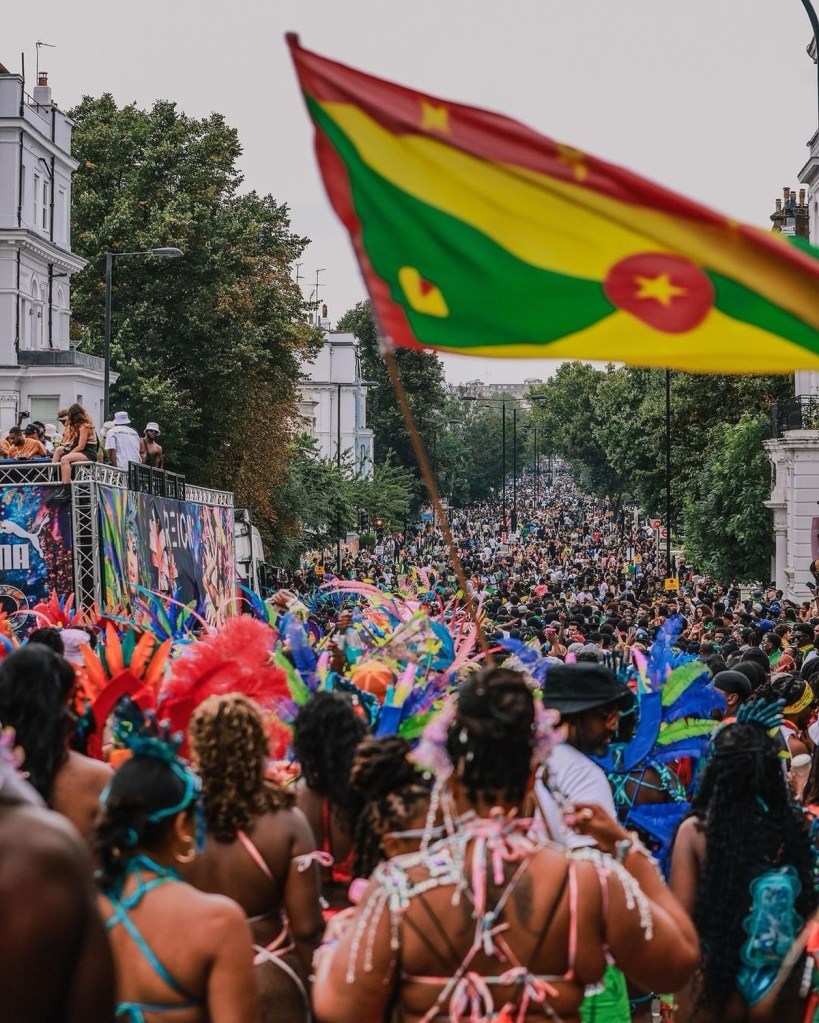
For Africans and Caribbeans living in the UK, Carnival doesn’t land the same way. We can both claim it, but we don’t claim it the same. And that difference, as subtle or sharp as it is, says a lot about the ways our histories and cultures collide in diaspora.
Carnival as Caribbean Homeland
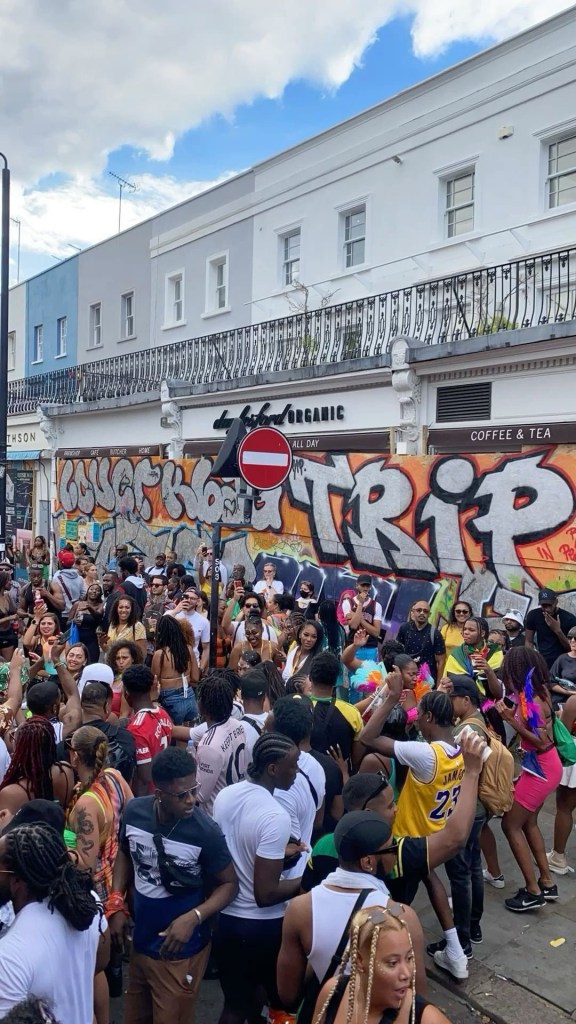
For many Caribbean people, especially those born here in the UK, Carnival is memory. It’s the physical manifestation of history that doesn’t always get taught in classrooms: slavery, colonialism, resistance, freedom. Carnival was born out of masquerade, rebellion, and the refusal to be erased.
When Caribbean communities in London first started Notting Hill Carnival in the 1960s, it wasn’t about spectacle—it was survival. It was the sound of steelpan echoing against racist hostility. It was community refusing to shrink back after years of police harassment and open violence. To be Caribbean and to experience Carnival is to step into an unbroken lineage, where the feathers, the mas bands, and the sound systems are all speaking back to history. It’s not just a party—it’s a homeland made portable.
That’s why Carnival for Caribbean people feels like “ours.” It’s the closest thing to touching soil without leaving the UK. It’s intergenerational. Aunties and uncles who danced in the ‘70s now bring their kids, who bring their kids. And while it’s open to everyone, there’s a certain rootedness in the Caribbean claim to Carnival that nobody else can imitate.
Africans at Carnival
For Africans, especially those who migrated later or whose parents did, Carnival is a bit different. It’s not home. We didn’t grow up with it as memory. We step into Carnival as foreigners, even when we’re Black, even when we’re “diaspora.” For many of us, Carnival is spectacle first—colour, music, dance, vibes. We come as participants, not inheritors.
That doesn’t mean we don’t belong there. Africans in the UK have always been part of the Carnival crowd, and over time our music—Afrobeats, Amapiano, Afro-swing—has started bleeding into the soundtrack. But there’s always this feeling that Carnival isn’t quite ours, that we’re borrowing it. Africans don’t bring masquerade in the same way; our own festivals back home don’t translate directly into Carnival. So instead, we show up, we dance, we eat, and we hold space as guests.
Sometimes this creates tension. Africans who don’t fully understand Carnival’s history can reduce it to “just a party” or fail to respect the deep political roots. And Caribbean people can feel protective, watching something that was born in their struggle become a backdrop for outsiders to just take photos and leave.
The Diaspora Gap
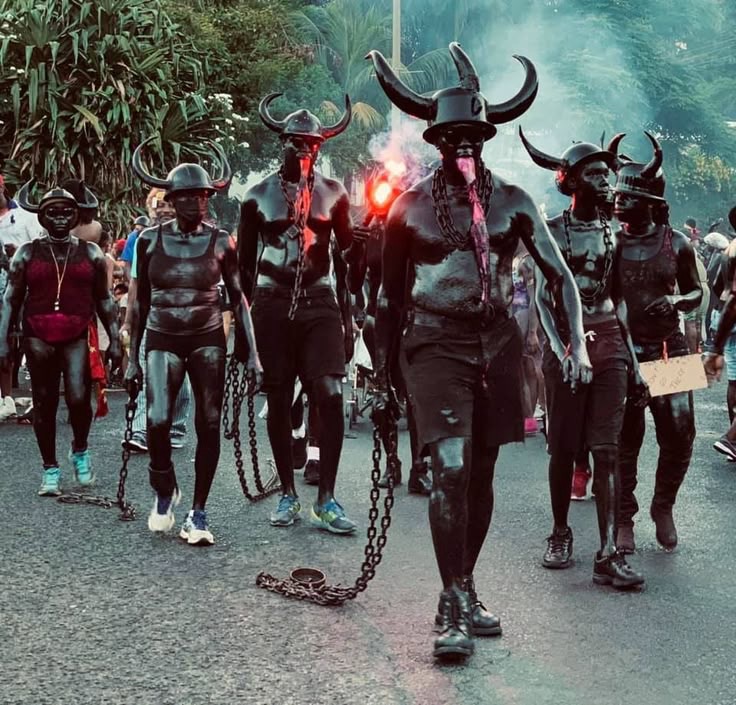
This difference isn’t just about Carnival—it’s about diaspora itself. Africans and Caribbeans are often put in the same “Black” box, but our histories with the West are not identical. Caribbeans came here through forced migration, enslavement, and postcolonial displacement. Africans arrived later, through choice, opportunity, or refuge.
So when we stand at Carnival, our relationship to Britishness and Blackness diverges. Caribbeans are fighting to hold onto identity in a place that tried to erase them. Africans are negotiating a fresher migration story, often still tied back to a visible homeland. For one group, Carnival is memory and survival. For the other, it’s an adopted tradition—a chance to belong in a diaspora space, even if the claim is thinner.
Carnival as Shared Space
Still, Carnival is one of the rare places where those differences blur. The bassline doesn’t care about your passport. Once you’re in the crowd, shoulder to shoulder, flags waving—Ghanaian, Jamaican, Trinidadian, Nigerian and Bajan. You feel the larger truth: this is Black joy in public. This is what the state can’t shut down, no matter how much it tries with overpolicing and restrictions.
In that way, Carnival does become something we all own together. It’s not about who was here first, but about how we carry each other’s traditions. Africans learning the language of mas, Caribbeans vibing to Afrobeats. Both groups understanding that Carnival, in essence, is protest dressed up as celebration.
The Tensions of Belonging
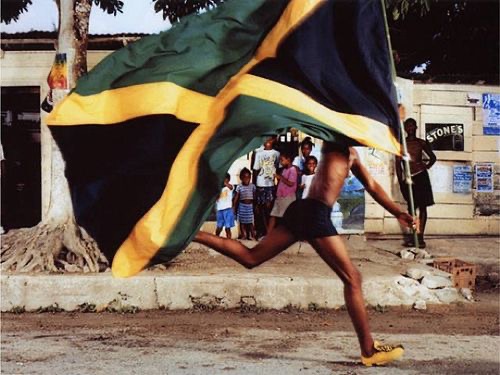
But let’s be real—it’s not always harmony. Africans can sometimes appropriate without credit, taking Carnival as just another aesthetic. Caribbeans can gatekeep, making Africans feel like outsiders even when they’ve lived in the UK just as long. And then there’s the way mainstream Britain swoops in, consuming Carnival for headlines, police photo-ops, and influencer content, stripping away the politics.
This is where Africans and Caribbeans could actually meet each other: in protecting Carnival from being watered down. In remembering that Carnival was never meant to be “inclusive” in the way Britain wants it to be. It was always meant to be resistance.
Carnival and Me: Closing Thoughts
As an African in the UK, Carnival is complicated. I go, I enjoy, I dance until my feet hurt—but lately, I’ve had to step back. I was invited to join a group of friends this year, but after some reflection, I decided not to go. The emotional and political weight that Caribbean society carries with Carnival is immense, and I felt it wouldn’t be right for me to step fully into that space as a participant. I’m not carrying ancestral memory into the streets; I’m borrowing space in someone else’s tradition. And yet, I don’t feel excluded. I feel welcomed, but with an understanding that there’s a difference.
That difference doesn’t have to be a wall—it can be a bridge. Carnival is teaching me that diaspora isn’t one-size-fits-all. Our Blackness holds multitudes, shaped by history and geography. Sometimes the best way to honour something is to celebrate it fully while still knowing it isn’t yours to rewrite.
Carnival in the UK will always be Caribbean at its core. It’s their history, their rebellion, their gift. For Africans, stepping into that space means recognising it as a form of solidarity—not ownership. And maybe that’s the point: Carnival isn’t supposed to flatten us into sameness. It’s supposed to show us that our differences can still dance together, even if the rhythm comes from different drums.
Because at the end of the day, Carnival isn’t just a party. It’s the loudest reminder that Black joy, no matter its accent, can’t be erased.
Until next time,
see you next week, guys!
Perrine
© 2025 Culture-Anthology
 culture-anthology
Leave a comment