91 years of Armani: A moment worth noting
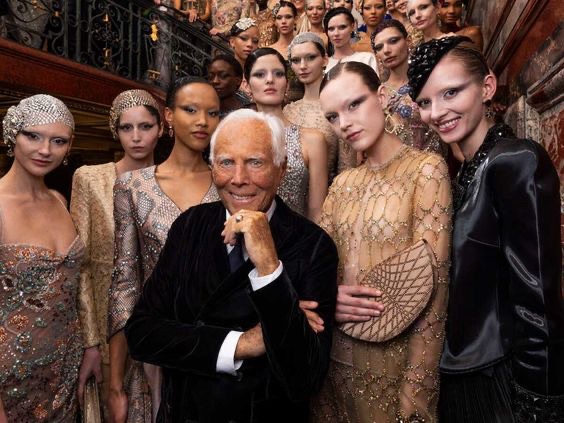
This week, Giorgio Armani turned 91. Ninety-one. Nearly a century of life, style, and quiet command. The tributes have poured in: soft-focus montages, tailored retrospectives, and a chorus of voices celebrating the Italian designer’s understated brilliance. He’s hailed as an icon who revolutionised tailoring, who gave women permission to feel powerful in minimalism, and who above all stayed consistent. Not flashy. Not loud. Just solid. Timeless.
The right to grow old
But in the midst of this deserved celebration, I couldn’t help but notice the silence around a bigger truth: how rare it is to see creatives especially Black or POC artists grow old within fashion, let alone have their legacies preserved, funded, and uplifted in this way.
There’s something so particular about the way white men in fashion are allowed to age. Their wrinkles become wisdom, their muted palettes a mark of restraint. When they go quiet, it’s seen as elegance. When they reappear, it’s hailed as genius. But for many Black designers and other POC creatives, silence is interpreted as irrelevance. Absence is treated like failure. And aging isn’t legacy it’s invisibility.
This isn’t about diminishing Armani
Let’s be clear: Giorgio Armani deserves every flower he gets. This isn’t about taking anything away from him. But when we praise him, we need to also question the system that makes his kind of longevity so rare for others.
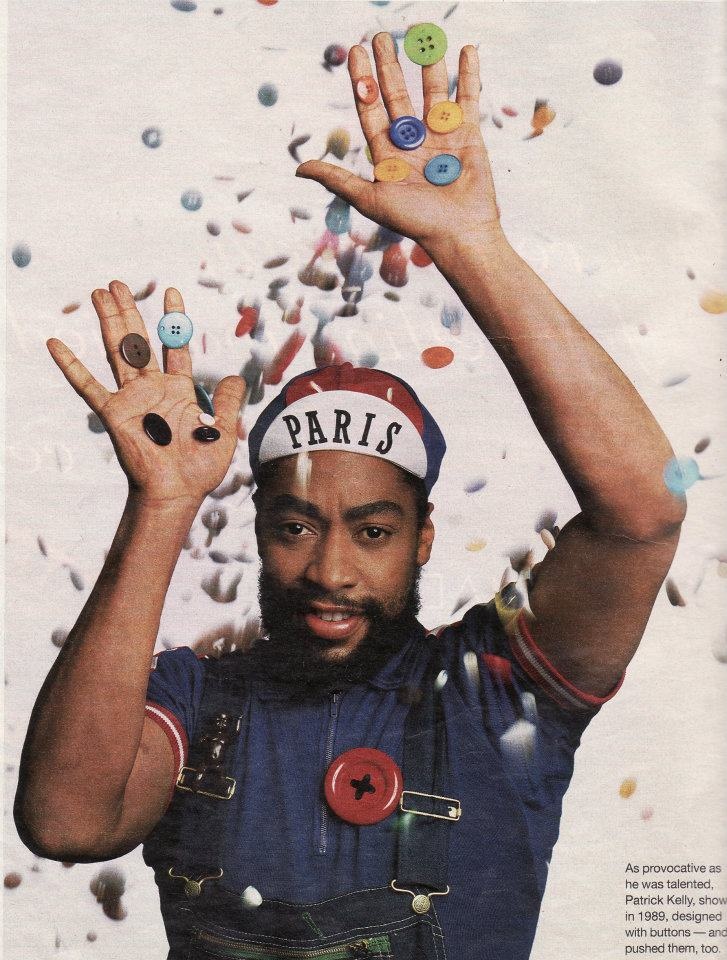
Where are the tributes to Patrick Kelly? Why aren’t we archiving the work of Tracy Reese or Byron Lars with the same precision? Where’s the funding for aging Black designers many of whom had to break open doors just to have their names mispronounced on runways?
Whiteness and the myth of timelessness

Even in death, Black fashion creatives often don’t receive the kind of reverence white designers are handed in their 80s. There’s something haunting about how quickly the industry moves on from us how often our work is cited, borrowed, and remixed, but our names left in the margins.
Armani’s career is built on a kind of understated luxury a style that Western fashion upholds as eternal. But what about the bombastic elegance of 1980s Black American glam? What about the bold prints of Oumou Sy in Senegal, or the quiet strength of Nigerian tailoring passed down through families? These styles aren’t treated as lasting often they’re dismissed as “of the moment,” or “too specific,” or just “urban.” That word. “Urban.” A quiet coffin for so many brilliant ideas.
Longevity requires infrastructure
Let’s not ignore that white elder creatives are often supported by immense resources: teams, wealth, access. They get to refine and streamline because the world gives them the time. Meanwhile, many Black designers are expected to do everything at once be visionaries, stylists, marketers, storytellers, all while fighting for press coverage that doesn’t flatten their voice.
There’s no space to age gently when you’ve spent your whole career sprinting uphill.
Buying fashion: A cultural shift
This isn’t just about fashion. It’s about how we treat legacy across culture. It’s about how often we ask Black creatives to be relevant instead of respected. How we keep asking “What’s next?” instead of honoring what already was.
I think about what it would look like if we protected Black designers the way we protect legacy houses. If we funded them the way we fund heritage brands. If we taught their names in schools. If we let them grow old and grey and brilliant without needing to perform for virality.
What would happen if we nurtured creative longevity outside of whiteness?
A manifesto for memory
This is not a mourning post. It’s a manifesto for memory. A call to archive better. To document and uplift now not just in death, or after decades of struggle. Giorgio Armani is proof that you can stay soft and still lead. That luxury doesn’t have to be loud. But our job now is to make sure that same grace is extended across the board.
As we wish Armani a happy 91st, let’s also imagine a future where more Black designers get to blow out candles on that same cake with decades of style behind them, and the world still listening.
Until next time,
see you next week guys!!
Perrine
© 2025 Culture-Anthology. All Rights Reserved.
 culture-anthology
Leave a comment